
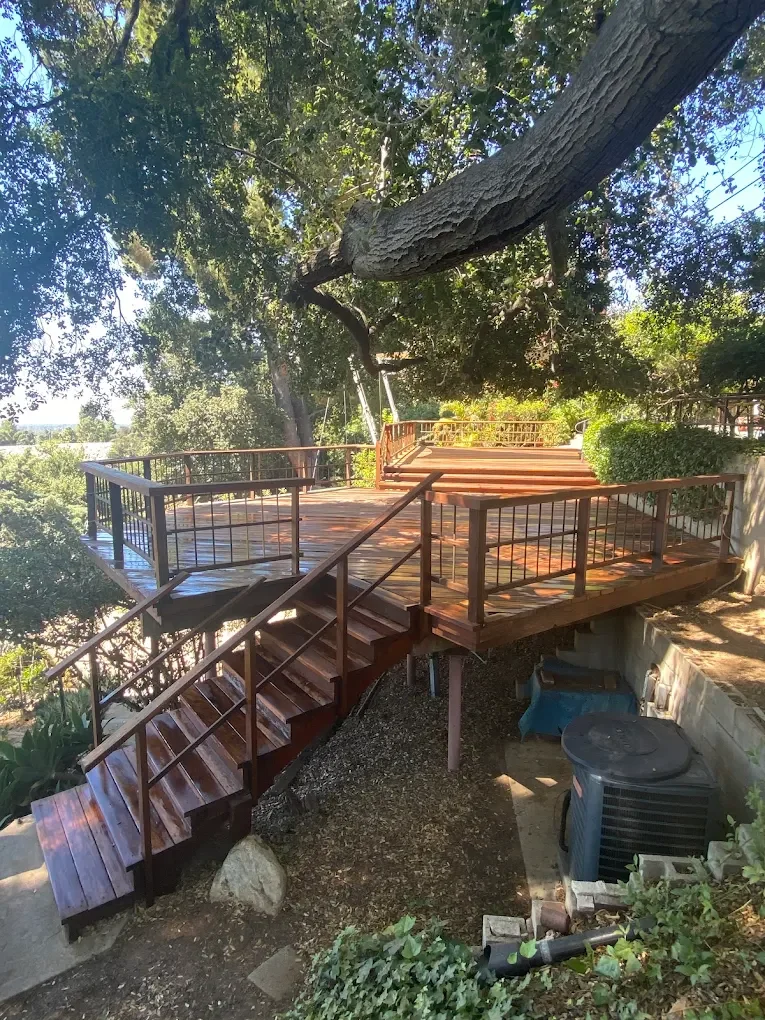
When choosing between staining and painting your deck in California, consider durability, maintenance, cost, and appearance. Here's the key takeaway:
- Staining: Highlights natural wood grain, requires less prep, and avoids peeling but needs reapplication every 2–5 years. Great for newer or high-quality wood decks.
- Painting: Offers longer-lasting protection (7–10 years), hides imperfections, and provides better UV resistance, but costs more upfront and involves more prep work.
Quick Comparison
| Feature | Staining | Painting |
|---|---|---|
| Durability | 2–5 years | 7–10 years |
| Maintenance | Frequent touch-ups | Less frequent, more involved |
| Cost | Lower upfront, higher over time | Higher upfront, lower over time |
| Appearance | Shows natural grain | Opaque, hides imperfections |
| Best For | Newer decks, premium woods | Older decks, heavy sun exposure |
Choose based on your deck's condition, your style preference, and how often you're willing to maintain it.
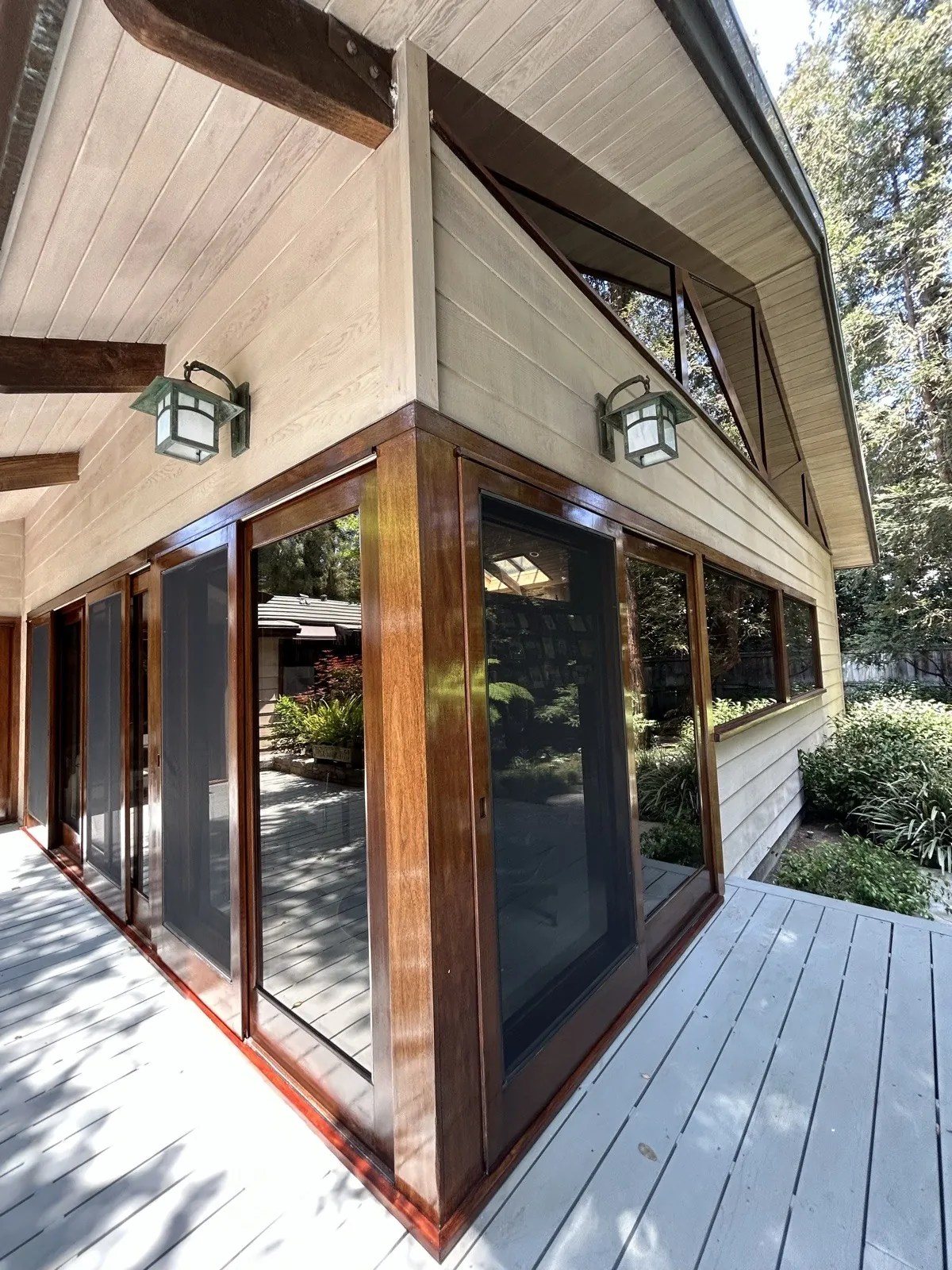
Deck Staining: How It Works and What to Expect
What is Deck Staining?
Deck staining works by soaking into the wood rather than sitting on top like a film. This allows the wood to release trapped moisture, reducing the risk of bubbling or peeling - common problems with surface coatings.
Stains come in three main varieties: transparent, semi-transparent, and solid. Each offers a different level of visibility for the wood's natural grain. For instance, in California, premium hardwoods like teak and ipe are often treated with transparent stains to showcase their natural beauty. Meanwhile, softwoods like cedar and pine, which absorb stain more readily, may need more frequent maintenance.
This ability to deeply penetrate the wood is what drives many of the benefits of staining.
Benefits of Deck Staining
One major perk of staining is its durability against peeling and cracking. Because the stain soaks into the wood, it avoids the chipping or blistering that can occur with surface finishes. Instead, it fades gradually, making touch-ups easier.
"Stain penetrates the wood, so it doesn't peel, crack, or blister over time.
Staining also simplifies the preparation process. Typically, a clean surface and some light sanding are all you need before applying the stain. Plus, stains often contain fewer chemicals and lower levels of volatile organic compounds, making them a more eco-friendly option for homeowners.
Limitations of Deck Staining
While staining has its advantages, it does come with a shorter lifespan compared to paint. Most stained decks require reapplication every 2 to 5 years. Transparent and semi-transparent stains, in particular, may need touch-ups every 2 to 4 years.
UV protection is another challenge. Although stains offer some defense against sun damage, transparent formulas provide minimal protection. Under California's intense sun, this can lead to quicker fading and wear.
Temperature also plays a role in the staining process. Stains should be applied when the wood surface is between 50°F and 90°F. On a hot day in California, deck surfaces can exceed 90°F, which can cause the stain to dry too quickly, leading to poor absorption and visible lap marks.
Another consideration is aesthetics. Transparent stains, while great for highlighting natural grain, also emphasize imperfections like knots or weathered spots. This can make flaws in the wood more noticeable rather than hiding them.
Deck Painting: How It Works and What to Expect
What is Deck Painting?
Deck painting creates a thick, opaque layer over the surface of the wood, acting as a seal against moisture, UV rays, and foot traffic. This coating also hides the natural wood grain, making it a great option for older decks with imperfections like mismatched boards or deep cracks.
"Paint creates a thick, opaque layer that covers the wood entirely.
The process involves several steps. First, the deck is power washed to remove dirt and debris. Then, any loose paint is sanded or scraped off, and bare spots are primed to ensure the paint adheres properly. Finally, multiple topcoats are applied to create a durable finish. This preparation makes the process more labor-intensive and costly compared to staining.
Thanks to this thorough application, painted decks are better equipped to handle the tough weather conditions in California.
Benefits of Deck Painting
When done properly, deck painting offers some compelling advantages. For starters, a painted deck can last between 7 and 10 years before needing a complete redo, even under the intense sun of California. The opaque paint layer acts as a protective shield, guarding the wood against UV rays and moisture. This helps prevent common issues like swelling, cracking, and rot.
Another big plus is the ability to customize the look of your deck. Paint gives you access to a wide palette of solid colors, allowing you to match your deck to your home's trim or create a sleek, modern appearance. This level of design flexibility is something transparent stains, which highlight the wood's natural grain, simply can't achieve.
Limitations of Deck Painting
While painting offers durability and aesthetic options, it does come with some challenges. One of the biggest concerns is peeling and bubbling. Because paint seals the wood completely, it can trap moisture underneath. If water seeps in through cracks or during humid conditions, this trapped moisture can cause the paint to bubble, peel, or even lead to wood rot.
Repairs on painted decks can also be tricky. You can't just touch up peeling areas; instead, the failing sections need to be sanded or stripped before applying new coats.
"If paint begins to crack or peel, the repair process is more involved.
Another factor to consider is the higher upfront cost. Painting requires specialized primers, multiple topcoats, and significant labor, making it more expensive than staining. Additionally, because paint completely covers the wood's natural grain, it might not be the best choice if you want to highlight premium hardwoods.
These factors highlight the maintenance and effort required to keep a painted deck looking its best.
How Long Each Option Lasts in California
Expected Lifespan: Stain vs. Paint
When it comes to longevity, paint outlasts stain. Paint can hold up for 7–10 years, while stain typically needs reapplication every 2–5 years.
Among stains, solid stains last longer, offering durability for about 4 to 5 years. In contrast, transparent and semi-transparent stains may require touch-ups every 2 to 4 years, especially in areas exposed to heavy foot traffic or direct sunlight. This difference in durability is even more pronounced in California, where the weather can be particularly harsh on outdoor finishes.
How Each Finish Handles California Weather
California's intense sun is one of the biggest challenges for deck finishes. Paint provides a strong UV-blocking barrier, making it better at resisting sun damage. On the other hand, transparent stains offer minimal UV protection, making them more vulnerable to fading.
Both finishes can handle California's dry summers, but winter moisture reveals their weaknesses. If paint's seal fails, it can trap water underneath, leading to bubbling or peeling. Stain, which doesn’t form a solid film, avoids these issues but fades more quickly under constant sunlight. This means stained decks often need more frequent maintenance to stay protected.
For stained decks, inspect them every two years for signs of fading to ensure they continue to shield the wood effectively.
Maintenance Requirements for Each Option
Maintenance Effort: Stain vs. Paint
California's intense sun and coastal moisture make regular deck maintenance a must.
Painted decks typically require a complete redo every 7–10 years. When the paint starts to fail, you’ll need to scrape off loose sections, sand the surface until smooth, and prime any exposed wood before applying a fresh coat of paint.
Stained decks, on the other hand, need upkeep more frequently - every 2–5 years. Maintenance usually involves washing, light sanding, and adding new stain coats. However, transparent stains often need touch-ups every 2–3 years due to California’s climate.
Both finishes benefit from regular power washing to keep them clean. That said, painted decks are easier to clean because of their smooth surface, while stained decks, with their textured finish, tend to trap more dirt.
These maintenance routines also play a role when tackling common issues with deck finishes.
Fixing Common Problems
If paint starts peeling, you’ll need to strip the damaged areas down to bare wood, sand the surface smooth, and apply primer before repainting. For fading stain, the process is simpler: wash the surface, lightly sand it, and reapply the stain.
For small cracks or nail holes on either finish, epoxy putty or wood filler works well before refinishing. If any boards are severely rotted, they’ll need to be replaced entirely.
Cost Comparison: Upfront and Long-Term
Initial Costs: Staining vs. Painting
If you’re looking at the initial price tag, professional deck staining typically costs about $850, while painting averages closer to $1,000. The difference mostly comes down to the extra labor and materials required for painting. For instance, painting often involves applying a primer - especially on pressure-treated wood - and two coats of paint. Staining, on the other hand, usually requires just one coat. Even the materials themselves reflect this cost difference: deck stain runs between $20–$35 per gallon, while deck paint costs $30–$60 per gallon.
"Expect to pay $850 for professional staining or $1,000 for professional painting. Your budget ultimately drives your choice." – Kyle Schurman, Contributing Writer, Angi
While staining may seem like the budget-friendly option upfront, keep in mind that it may need to be redone more frequently, which can add up over time.
Total Costs Over 10 Years
When you stretch the timeline out to 10 years, the cost dynamics shift. Staining may save you money initially, but its shorter lifespan means more frequent reapplications. A high-quality paint job can last 7–10 years before needing a complete redo, while stain typically fades after 2–3 years. That means you could be restaining your deck three to five times over a decade, compared to painting just once.
Here’s how the math breaks down: if you hire professionals, restaining four times over 10 years at $850 per job could cost more than $3,400. In contrast, a single professional paint job would likely run about $1,000–$1,200.
"Paint costs more upfront and often requires primer, especially on raw wood.
For homeowners in it for the long haul - especially in places like California where decks are exposed to year-round sun - painting might deliver better long-term value, even if it’s pricier to start.
Appearance: Which Look Fits Your Deck?
The finish you choose for your deck doesn’t just affect its durability and maintenance - it also plays a big role in defining its overall style and vibe.
Stain's Natural Wood Appearance
Stain works by soaking into the wood rather than sitting on top, which enhances the wood’s natural texture and grain. This approach brings out the unique details, like knots and patterns, giving your deck a warm, earthy feel. It’s a perfect match for premium woods like teak or ipe, where the natural beauty of the material takes center stage. Stained decks often complement craftsman-style homes, rustic cabins, or properties surrounded by natural landscaping. However, because stain highlights every detail - including flaws - it’s best suited for newer decks or those in great shape.
Paint's Solid Color Coverage
Paint, on the other hand, forms a thick, opaque layer that completely covers the wood grain. This gives you total control over the color, whether you’re aiming for a clean white, a bold red, or any shade in between. It’s especially useful for older decks, as the solid finish can hide imperfections like cracks, weathered boards, or uneven tones. Painted decks work well with modern homes where a specific color palette or a seamless match with the home’s exterior is key. Plus, softwoods like pine and cedar benefit from the added protection that paint provides.
How to Choose Between Staining and Painting
What to Consider Before Deciding
Take a close look at your deck's condition before making a decision. If it’s older and shows signs of wear like cracks, weathered boards, or uneven coloring, paint might be the way to go. It creates a smooth, uniform layer that can hide imperfections. On the flip side, if your deck is newer or made from high-end hardwoods like teak or ipe, stain is a great option. It enhances the wood's natural beauty and highlights its grain.
The type of wood also matters. Softwoods like pine and cedar absorb stain well but might benefit from paint's added protection. Hardwoods, however, shine best with stain, which brings out their rich, natural look.
Sun exposure is another key factor. In sunny states like California, UV rays can break down finishes faster. Decks in full sun will need more frequent upkeep, while those in shaded areas require less maintenance.
Foot traffic is important to think about too. If your deck is a hub of activity - whether from kids, pets, or frequent gatherings - paint offers a thicker, more durable layer to handle the wear and tear. Stain, while easier to touch up, might not hold up as well under heavy use.
Lastly, consider how much maintenance you’re willing to do. Paint tends to last longer between major updates, but when it does need work, the process can be more involved. Stain, on the other hand, requires more frequent touch-ups but is easier to apply.
These considerations help lay the groundwork for choosing the right finish, especially in California's demanding climate.
Expert Advice from Huff Painting Co.
Huff Painting Co., a trusted name in Sierra Madre since 1980, has extensive experience dealing with Southern California's intense sun and its impact on wood decks. They highlight the importance of refinishing, not just for looks but to maintain the structural integrity of your deck.
"Stain is generally the better choice for most wood decks because it penetrates the grain and allows the wood to breathe, which reduces peeling." - Huff Painting Co.
That said, they acknowledge that paint can be a good option for older decks:
"Paint provides a thicker, more opaque finish but can crack and peel over time, especially on horizontal surfaces that take direct sun and foot traffic." - Huff Painting Co.
For California homeowners, Huff Painting Co. recommends using professional-grade products like TWP, Cabot, and Sherwin-Williams SuperDeck. These finishes are designed to withstand the region's harsh UV exposure. Based on their experience, most decks in the San Gabriel Valley need refinishing every 2–4 years due to the intense sunlight.
If you're unsure what’s best for your deck, professional advice can make all the difference. Huff Painting Co. offers services like color consultations and deck staining to help you choose the right finish for your deck’s specific needs and your maintenance preferences.
Conclusion
When it comes to California decks, both staining and painting have their advantages, and the best option really depends on what matters most to you. Paint lasts longer and offers excellent protection against California's harsh UV rays and moisture, making it a great choice for older decks that show wear or need maximum weatherproofing. That said, repainting can be labor-intensive, involving significant scraping and sanding.
Stain, on the other hand, soaks into the wood, allowing it to "breathe" and avoiding the peeling issues often associated with paint. While it typically needs reapplication every 2 to 5 years depending on sun exposure, the process is straightforward - just clean the surface and reapply. Stain is perfect if you want to highlight the wood's natural grain or if your deck is made from high-quality hardwood. However, it does require more frequent upkeep.
When it comes to UV and moisture protection, the type of finish also plays a role. Decks in full sun benefit from solid stains or paint for better UV resistance, while oil-based products are great for coastal decks where rot prevention is key. Additionally, the current state of your deck is an important factor - paint can mask imperfections, whereas stain enhances the wood's natural charm.
Think about how you approach maintenance: if you'd rather tackle larger projects less often, paint might be your go-to. If you prefer easier, more frequent touch-ups, stain is likely the better fit. Both options hold up well in California's climate, so the choice ultimately comes down to your deck's condition, your aesthetic preference, and how much effort you're willing to put into keeping it looking great.
FAQs
Can I paint over an already stained deck (or stain over paint)?
When it comes to working with a deck that’s already painted or stained, preparation is everything. If you’re planning to paint over a stained deck, you’ll need to make sure the surface is thoroughly cleaned, sanded, and possibly primed to help the paint stick properly. On the flip side, staining over paint isn’t a great idea. Why? Paint creates a barrier that prevents stain from soaking into the wood, which can result in blotchy and uneven coverage.
The bottom line: if you’re switching between paint and stain, taking the time to prep the surface correctly is essential for a finish that looks good and lasts.
Which finish is best for a coastal California deck with salty, moist air?
Stain finishes work particularly well for decks in coastal California. Thanks to their ability to soak into the wood, stains provide excellent protection against moisture and salt exposure - two common challenges in this environment. Unlike paint, which creates a solid layer on the surface, stains are more adaptable. They’re less likely to peel or crack in the humid, salty air. Paint can trap moisture beneath its surface, eventually leading to peeling and chipping. For a durable finish that also maintains a natural look, staining is the smarter choice.
What’s the best time of year to stain or paint a deck in California?
The best time to stain or paint a deck in California is during late spring or early summer. During this season, the weather is typically dry and warm without being excessively hot, creating ideal conditions for proper application and drying. It's important to steer clear of wet, humid, or rainy periods, as these can compromise the finish and longevity of your deck.
More guides
- Fence Painting and Staining: Complete Guide for San Gabriel Valley Homeowners
- Garage Makeover: Painting Walls, Floors, and Cabinets for a Complete Transformation
- 5 Signs Your Home Exterior Needs Repainting This Spring
- How Often Should You Repaint Your Home in Southern California?
- How to Choose the Right Interior Paint Finish for Every Room
Related painting services
If this article covers something you are planning, these pages go into what the work actually involves on a job.
- Interior painting for walls, ceilings, trim, and cabinets, including how we mask and protect a house you are still living in.
- Single family home painting for a whole house inside or out, from the first walkthrough to the final punch list.
- Apartment building painting for owners and property managers with occupied units and common areas that have to keep working.
- Painting in Pasadena and the rest of the San Gabriel Valley, with the local prep, permit, and historic district notes that apply there.