
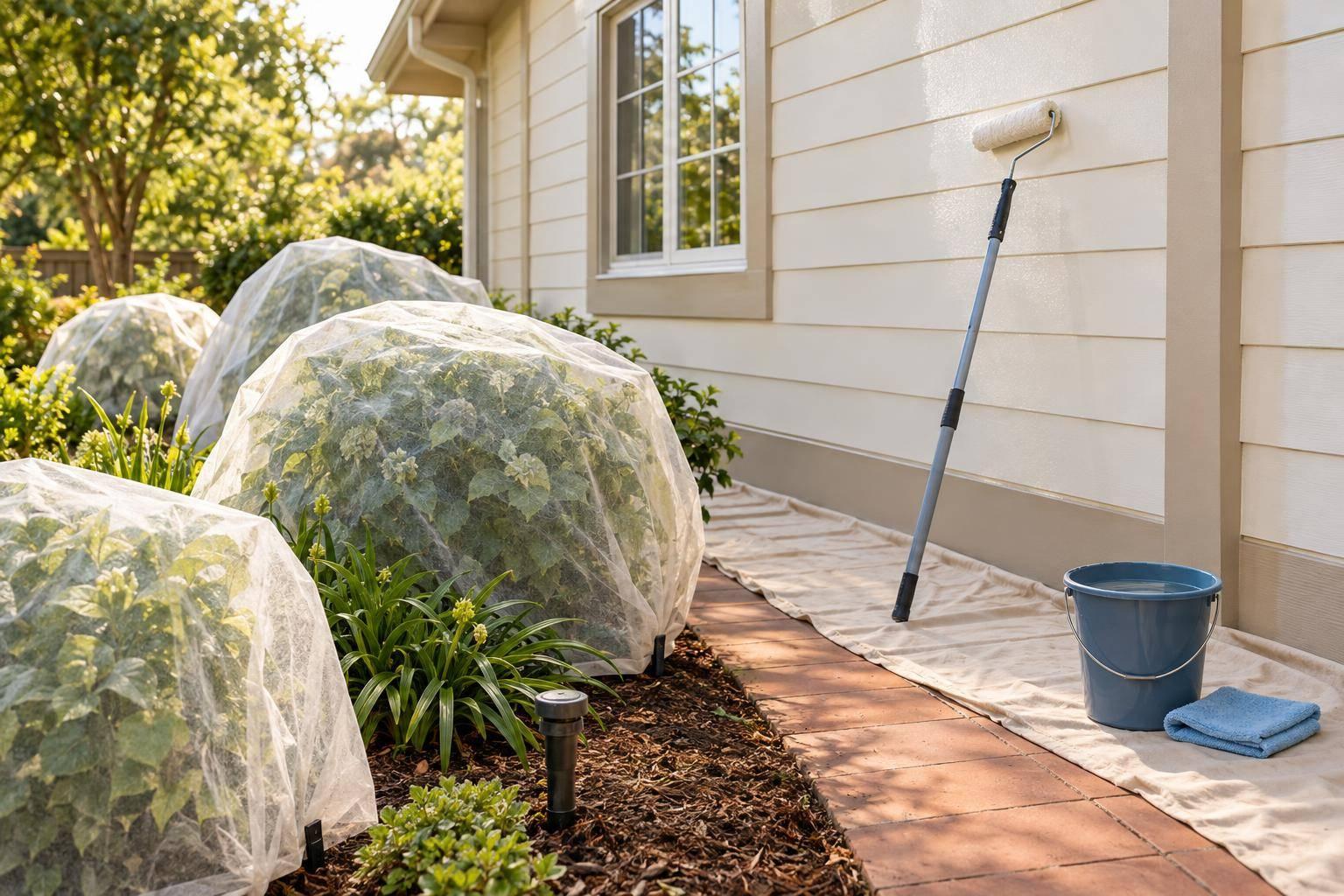
Protecting Your Garden and Landscaping During Exterior Painting
Protect plants with breathable fabric, keep equipment out of garden beds, and work one wall at a time. For homes in Sierra Madre and the San Gabriel Valley, start with a walkthrough to mark fragile plants, irrigation lines, and safe crew access.
- Before painting: Move pots and decorations, tie branches back gently, and cover soil and hardscape.
- During work: Pause sprinklers that spray the house and check covers for heat, shifting, or paint soaking through.
- After painting: Collect debris, contain spills, and check plants and irrigation before watering resumes.
Wait until paint is dry and the area is clean before returning items. Photograph any plant damage and report it to the painter.
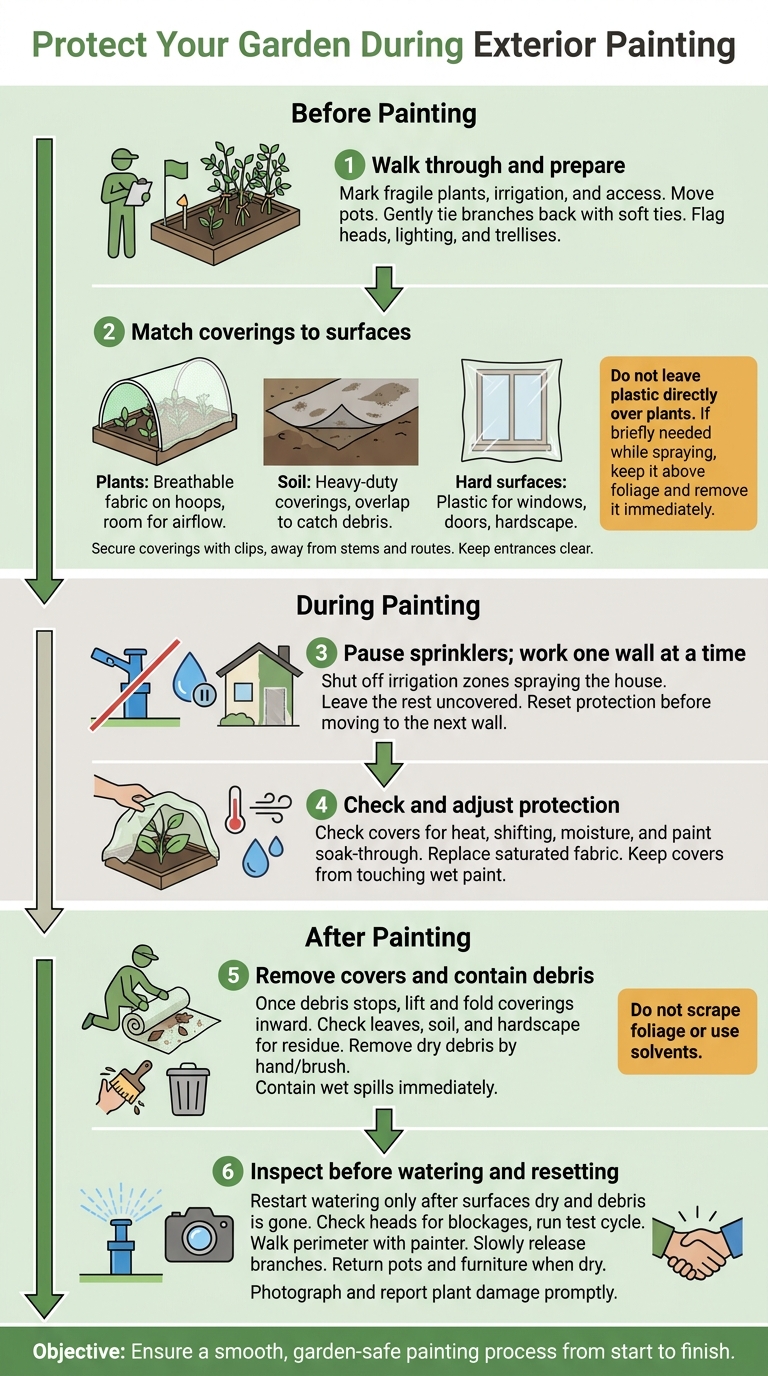
Protect Your Garden During Exterior Painting
Preparing the Gardens for Work on the House: Painting, Roofing or Windows
sbb-itb-b9ba8eb
Choose the Right Protective Coverings
Use breathable fabric over plants, plastic only on hard surfaces, and heavy-duty cloths on the ground to catch paint chips and dust.
Use Breathable Fabric Over Plants
Support fabric on stakes or hoops above delicate growth, leaving room for airflow. Check covers throughout the job to keep them in place as work shifts, and replace any fabric that paint soaks through.
Don’t leave plastic directly over plants, especially in warm, sunny weather. If you need a brief plastic barrier while spraying, keep it above the foliage and remove it as soon as spraying stops. During breaks, check temporary covers for trapped heat, moisture, and movement caused by wind.
Cover Soil and Hardscape Safely
Lay heavy-duty coverings before scraping or sanding. Overlap adjoining pieces and extend them far enough to catch falling debris without pressing down on low-growing plants. Avoid thin, loose plastic on the ground; paint chips and foot traffic can tear it.
Reserve plastic for windows, doors, and hardscape exposed to overspray. Secure coverings with clips or weights, keeping them away from stems and walking routes. Flatten any lifted edges, keep entrances and steps clear, and prevent paint from pooling beneath the covering.
Protect the ground between work areas, too, so the crew can move from section to section without spreading debris.
Protect Plants During Painting
Once coverings are in place, work one wall at a time to leave the rest of the landscape uncovered. Keep access clear, and flag fragile plants, irrigation heads, lighting, or trellises that need extra protection.
Secure growth with soft horticultural ties to keep climbing plants and trellises away from ladders and wet paint.
Pause Sprinklers and Work in Sections
Shut off irrigation zones that spray the house during prep and painting. Water can shift covers, make surfaces slippery, and splash wet paint. Coordinate the shutoff with the crew, and restart watering once painted surfaces are dry.
After the crew finishes each wall, reset the protection before moving to the next section. During breaks, check whether covers are touching wet paint and adjust them as needed.
Remove Covers and Collect Painting Debris
Once painting is finished and debris has stopped falling, carefully lift the coverings and fold or roll them inward. Bag disposable materials and clean reusable coverings according to the paint manufacturer’s instructions. Clean residue from nearby surfaces before it dries.
Check leaves, stems, soil, mulch, hardscape, fixtures, and irrigation parts for droplets, chips, dust, tape, caulk residue, and masking material. Remove dry debris by hand or with a soft brush. Don’t scrape foliage or use solvents. Collect loose chips, contaminated mulch, and paint-stained soil without spreading them, and contain them for disposal. California prohibits disposing of liquid latex paint on land or in state waters.
Clean Up Spills Before Restarting Irrigation
Contain wet spills immediately. Stop the source if it’s safe, and use absorbent material approved for the spill. Follow the paint label’s cleanup instructions. Collect the residue and keep it out of beds, streets, gutters, and drains.
Before restarting irrigation, remove coverings, absorbent material, and any remaining debris. Check sprinkler heads and emitters for blockages. Run a brief test cycle and watch for runoff around beds, paved areas, and drains. Stop the system if any residue moves with the water.
After cleanup, inspect the landscape for missed residue, bent stems, or signs of stress.
Check Your Landscape After Painting
Once cleanup is done, walk the perimeter with your painter and check the finished work against your prework notes. Make sure plants are uncovered and no visible paint remains on leaves or stems. Slowly release tied-back branches so they can settle without snapping or rubbing.
Wait until the paint is dry and soil, mulch, paved surfaces, and irrigation parts are clear before putting pots, furniture, and decorations back.
If you spot damage, take photos before moving or trimming affected plants, then report it to Huff Painting promptly.
FAQs
How can I water covered plants during painting?
Gently lift the edge of the plastic sheeting or drop cloth, then water the soil at the base of your plants. If the cover is lightweight, you may be able to slide a hose or the spout of a watering can underneath.
At Huff Painting, we take care to cover your landscaping. We’re also happy to coordinate watering with you so your plants get the water they need throughout the project.
What should I do if wet paint lands on leaves?
If wet paint gets on leaves during an exterior painting project, consult professionals trained in proper containment. If Huff Painting is handling the job, contact the team about cleanup and restoration of the affected landscaping.
How can I tell if covered plants are overheating?
Wilting, curling leaves, browning, or discoloration can signal that your plants are overheating under protective covers. Check covered foliage regularly during exterior painting.
Huff Painting takes care when masking to protect your landscaping from paint. If you spot signs of heat stress, consider removing the covers during cooler parts of the day to improve airflow and help control the temperature.
More guides
- Pre-Rain Painting and Caulking Checklist for SoCal Homes
- Best Painting Contractors in La Cañada Flintridge CA (2026 Comparison)
- Best Painting Contractors in Sierra Madre CA 2026 Honest Comparison
- Best Craftsman and Historic Home Painters in the San Gabriel Valley 2026
- How to Verify a Painting Contractor Is Licensed, Insured, and Bonded in California
Related painting services
If this article covers something you are planning, these pages go into what the work actually involves on a job.
- Interior painting for walls, ceilings, trim, and cabinets, including how we mask and protect a house you are still living in.
- Single family home painting for a whole house inside or out, from the first walkthrough to the final punch list.
- Apartment building painting for owners and property managers with occupied units and common areas that have to keep working.
- Painting in Pasadena and the rest of the San Gabriel Valley, with the local prep, permit, and historic district notes that apply there.