
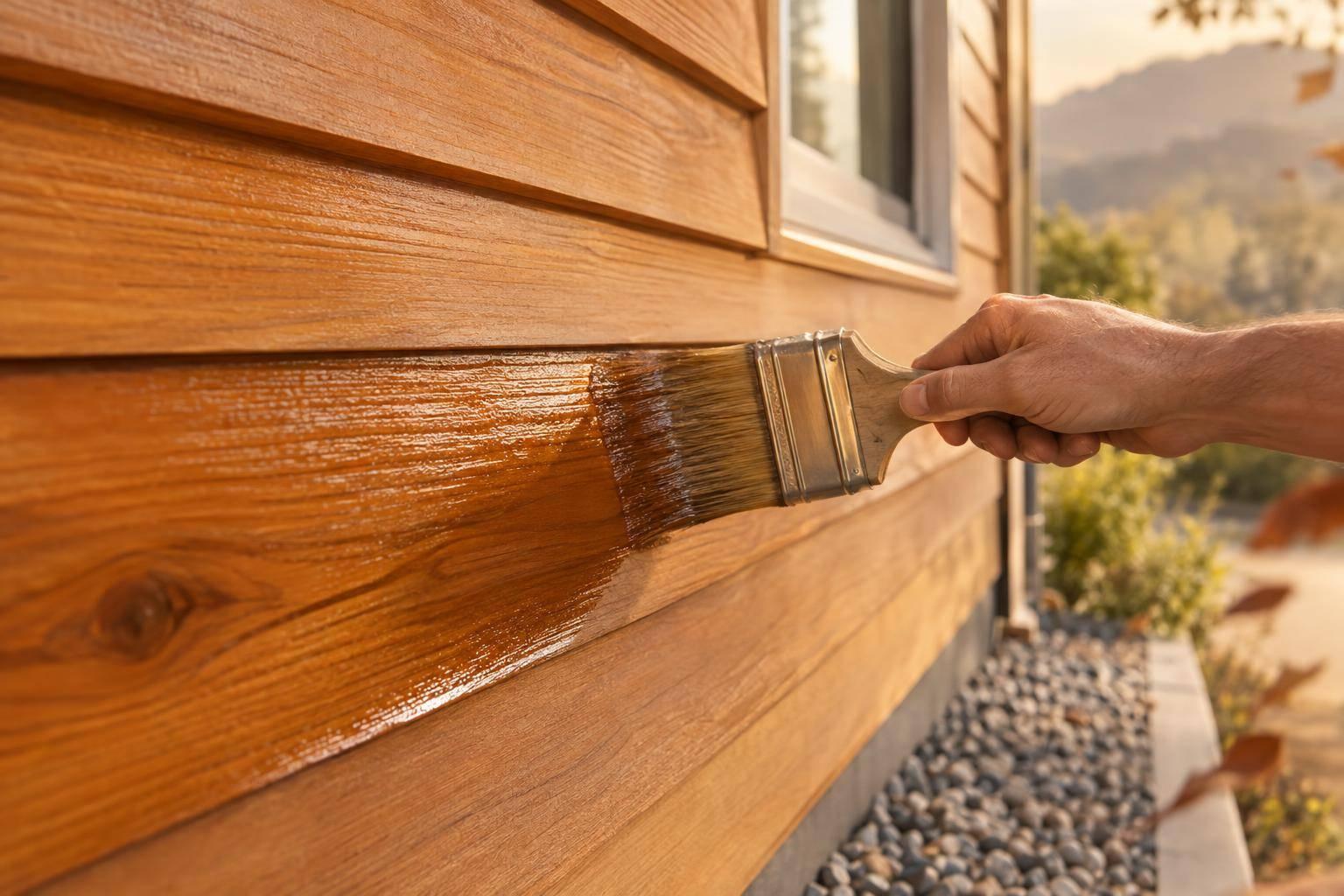
Protecting Wood Siding From Dry Santa Ana Winds
Before Santa Ana winds arrive, I recommend fixing loose boards, damaged wood, and failed caulk - not just adding paint. In Sierra Madre and the San Gabriel Valley, dry winds can shrink exposed wood and open gaps.
Here’s the order I’d follow to protect your siding:
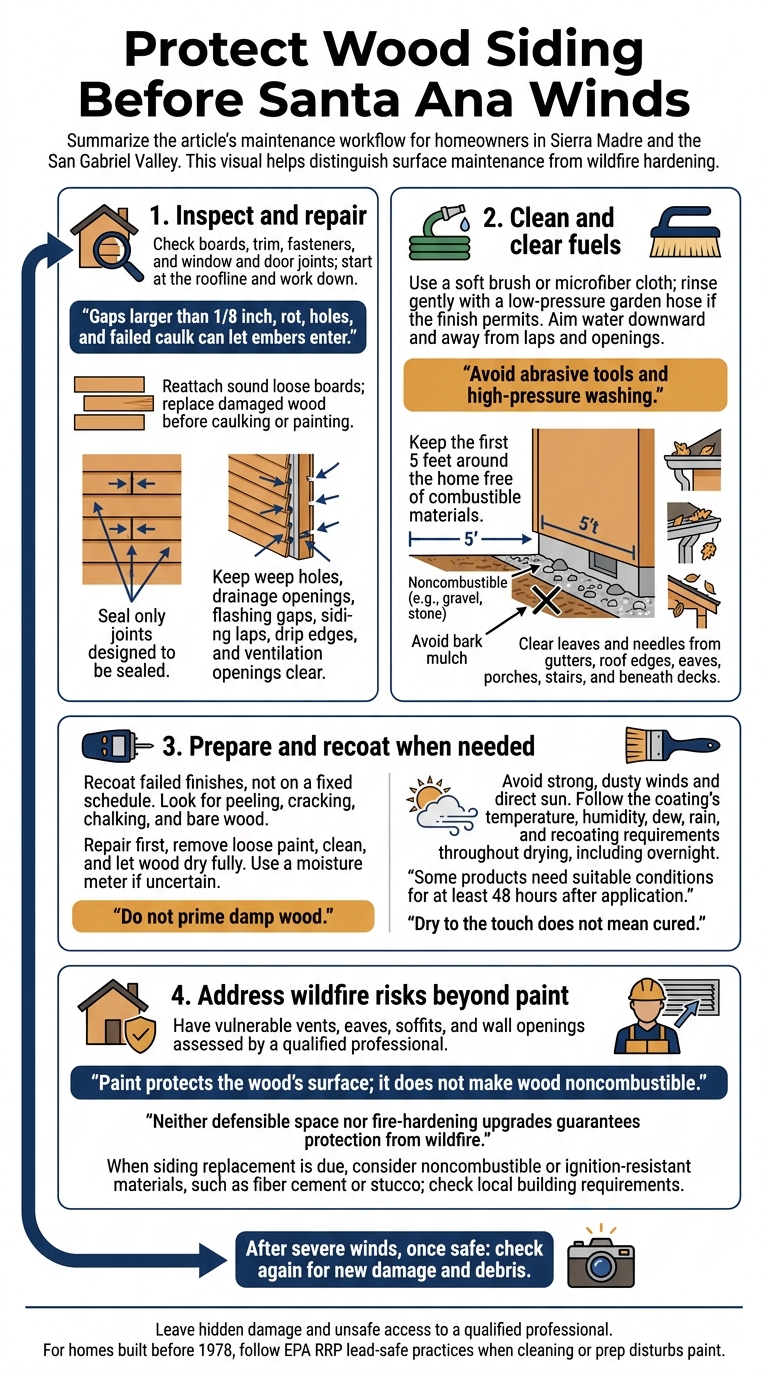
- Inspect and repair: Check boards, trim, and window and door joints. Keep drainage and ventilation openings clear.
- Clean gently: Remove dust and debris without high-pressure washing. Keep combustible materials out of the first 5 feet around your home.
- Recoat when needed: Prime and paint sound, dry wood when the forecast meets the coating’s requirements - not during strong, dusty winds.
- Look beyond paint: Have vulnerable vents, eaves, and wall openings checked, and consider fire-resistant siding when replacement is due.
<u>Paint protects the wood’s surface; it does not make wood noncombustible.</u> I’d check again after severe winds for new damage and debris, and leave hidden damage or unsafe access to a qualified professional.
Protect Wood Siding Before Santa Ana Winds
How To Maintain Western Red Cedar Siding and Trim
sbb-itb-b9ba8eb
Inspect and Repair Siding Before Strong Winds
Inspect the entire exterior in daylight before forecast Santa Ana winds. Check again after severe winds, once it’s safe. Start at the roofline and work down, paying close attention to corners, window openings, and roof-to-wall joints. Take close-up and wider-view photos of damage to track movement or growing gaps.
Check Boards, Trim, and Fasteners
Gaps larger than 1/8 inch, rot, holes, and failed caulk can let embers enter. Treat each as a defect that needs repair.
Reattach loose boards that are still sound using compatible exterior fasteners. Replace soft, crumbling wood or split attachment points. Don’t overdrive fasteners - doing so can trap water.
Get a professional assessment if you suspect rot or damage behind the siding, notice repeated movement, or can’t safely reach an area from the ground.
Check Caulk Around Windows and Doors
Check frame edges, upper corners, trim joints, and openings for pipes, cables, or vents. Look for sealant that has become brittle or pulled away. Remove failed caulk, then clean and dry the surfaces before applying a compatible exterior sealant. Repair damaged wood first, and follow the window, door, and siding manufacturer’s instructions.
Seal only joints designed to be sealed. Keep weep holes, drainage openings, flashing gaps, siding laps, drip edges, and ventilation openings clear. Caulk helps limit air and water entry, but it does not make openings ember-resistant.
Once repairs hold, remove dust and debris before recoating.
Remove Dust, Debris, and Nearby Combustibles
Clean Siding Without Damaging the Finish
Remove dust, cobwebs, and loose grit with a soft-bristle brush or microfiber cloth. If the finish can handle washing, rinse with a low-pressure garden hose. Aim the water downward and away from laps and openings. Avoid abrasive tools and high-pressure washing - they can strip sound paint and push water behind the boards.
For stubborn dirt, mildew, or algae, choose a cleaner approved for both the siding and its coating. Rinse gently, then let the wood dry fully before recoating. Hire a qualified painter if the paint is fragile or the siding is hard to reach. For homes built before 1978, follow EPA RRP lead-safe practices whenever cleaning or prep disturbs paint.
Clear Debris and Plants Near Exterior Walls
Once the siding is clean and dry, remove nearby fuel sources before recoating. Clear leaves and needles from gutters, roof edges, eaves, porches, stairs, and beneath decks. Check these areas again after windy weather. Built-up debris can catch embers and start spot fires near the home.
Keep the first 5 feet around the home free of combustible materials. Move firewood, spare lumber, cardboard, and dry plant debris away from walls. Replace bark mulch next to siding with gravel, stone, or bare soil.
Trim dead vegetation and branches that touch the siding or hang over the roof. Bring in a tree-care professional for work near power lines, unstable limbs, or roofs that are hard to access. Remove cuttings promptly rather than piling them beside walls or beneath eaves.
Prepare and Recoat Exposed Wood
Once the siding is clean and dry, recoat where the finish has failed - not on a fixed schedule. Look for peeling, cracking, chalking, and bare wood, especially where siding gets the most sun and weather exposure.
Repair and Dry Wood Before Coating
First, address damage that could trap moisture beneath new paint. Replace damaged boards, remove loose paint, scrape rough edges, and clean sound wood until it’s dust-free. Let all wash water dry completely before priming or painting.
If you’re unsure whether the wood is dry, use a moisture meter. Do not prime damp wood, particularly at joints, end grain, shaded spots, or behind trim. Use the primer recommended for the bare or repaired surface. Treat exposed end grain, cut edges, and repairs while keeping drainage gaps open.
Choose Suitable Weather for Painting
Once repairs are done and the wood is dry, choose your painting window carefully. Hold off during strong, dusty Santa Ana winds. Check temperature, humidity, and the forecast for the entire drying period, including overnight conditions.
Avoid direct sun, and follow the product’s limits for dew, rain, and recoating. Some products need suitable conditions for at least 48 hours after application. Dry to the touch does not mean cured.
Address Wildfire Risks Beyond Paint
Paint helps preserve wood, but wildfire protection also depends on the siding system, openings, and nearby fuel.
Wood siding is still combustible. Defensible space reduces nearby fuel, while fire-hardening upgrades help block ember entry. Neither guarantees protection from wildfire.
Review Wall Materials and Vulnerable Openings
Check vents, eaves, and soffits for gaps or damaged covers. Look for gaps around window and door frames, too. Have a qualified professional assess which exterior openings and assemblies need upgrades.
Clear dead plants, dry leaves, needles, weeds, and mulch from areas beside walls and beneath decks. Keep vegetation away from siding, windows, vents, eaves, decks, and porches.
When it’s time to replace siding, official guidance recommends considering noncombustible or ignition-resistant materials, such as fiber cement or stucco. Check local building requirements before choosing materials or making exterior changes.
Conclusion: Keep Up With Siding Maintenance
After severe Santa Ana winds, check the siding and nearby exterior again for damage and new debris. Stay on top of inspections, cleaning, repairs, coating maintenance, and fuel removal. For single-family homes in the San Gabriel Valley, Huff Painting can handle exterior coating maintenance. Paint helps, but it doesn’t replace structural repairs or wildfire hardening.
FAQs
How can I tell wood shrinkage from rot?
Check the wood’s texture and condition. Gaps, splits, or cracks often point to shrinkage as wood expands and contracts in dry heat. Rot, on the other hand, leaves soft, decaying spots.
Tap the wood trim and listen. A soft or hollow sound may suggest rot beneath the paint. Stains or flaking paint on fascia boards can also signal that the wood has absorbed moisture and started to decay.
What wood moisture level is safe for painting?
Wood needs to be fully dry before you prime or paint. Trapped moisture can cause paint to peel early or keep it from sticking properly. Wait until the surface is dry and conditions are stable - for example, after the morning dew has dried.
Which siding repairs should I prioritize before Santa Ana winds?
Start with wood rot, soft spots, and damaged trim or fascia - these are signs of paint failure. Scrape, sand, and repair damaged wood or stucco. Check for cracked caulk around windows, doors, and trim, and repair it to keep moisture and debris from getting behind your siding.
Huff Painting recommends finishing these repairs before applying new paint. This gives the paint a solid, stable base before dry Santa Ana winds arrive.
More guides
- Bathroom Paint: Best Products and Finishes for Moisture Resistance
- Best Exterior Paint Colors for Sierra Madre Homes in 2026
- Cabinet Painting in Sierra Madre: Transform Your Kitchen for Less
- Commercial Painting for San Gabriel Valley Storefronts
- Deck Staining vs Deck Painting: Which Is Better for California Decks?
Related painting services
If this article covers something you are planning, these pages go into what the work actually involves on a job.
- Interior painting for walls, ceilings, trim, and cabinets, including how we mask and protect a house you are still living in.
- Single family home painting for a whole house inside or out, from the first walkthrough to the final punch list.
- Apartment building painting for owners and property managers with occupied units and common areas that have to keep working.
- Painting in Pasadena and the rest of the San Gabriel Valley, with the local prep, permit, and historic district notes that apply there.