
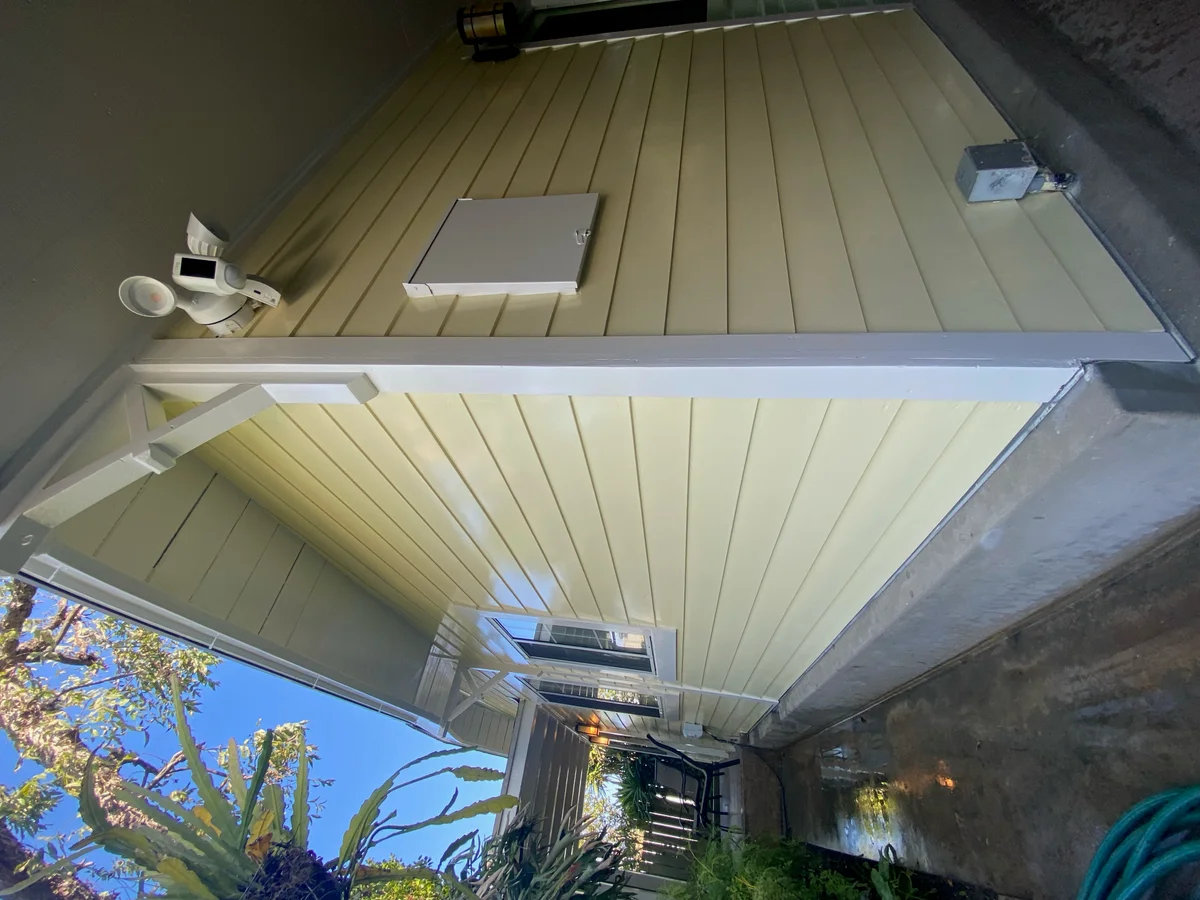
Stucco fails by cracking and wood fails by peeling and rotting, so the prep work on each one looks almost nothing alike. A stucco house needs cracks opened, filled and bridged with a coating that can flex. A wood sided house needs failing paint taken off, bare grain sealed and soft spots cut out before a drop of finish goes on. Skipping the right version of that work is the single most common reason a repaint looks tired long before it should.
Here's the short version:
- Stucco prep centers on cleaning, crack repair, patching and priming, then a flexible coating such as an elastomeric that moves with temperature swings.
- Wood prep centers on scraping, sanding to a sound edge, repairing dry rot or damaged boards, caulking joints and priming every bare spot.
- Both start with thorough power washing, because paint will not bond to dust, chalk or mildew.
- With proper preparation and premium paint, exterior finishes typically last 7 to 10 years in the San Gabriel Valley climate.
- Most single family home projects run five to ten working days, longer when there is significant wood repair or stucco patching.
Why the surface decides the whole job
Houses across Sierra Madre, Pasadena, Arcadia and San Marino were built across many eras and many styles. Spanish Colonial and mid century stucco sits a block away from Craftsman homes wrapped in wood siding and deep trim. Both can look great after a repaint. They just get there by different routes.
Stucco is a rigid cement based skin over a wall assembly. It expands and contracts with heat, and it is attached to a structure that settles. That combination produces hairline cracks, spider cracks around windows and occasional larger separations at corners. Stucco is also porous, which means it drinks coating and holds moisture if the surface is not sealed properly.
Wood is the opposite problem. It is flexible, it swells and shrinks with moisture, and it does not hold a film coating forever. Paint on wood fails at the film, not inside the substrate. It lifts, blisters, checks and peels, usually on the sun beaten elevations and anywhere water sat against end grain. When water gets behind the paint and stays, you get soft wood and dry rot, and no coating on earth repairs that.
Understanding which failure mode you are dealing with tells you where the labor hours belong. On stucco, hours go into repair and patching. On wood, hours go into removal and sealing.
Stucco prep, step by step
Wash first, always
Stucco holds chalked paint residue, dust and mildew in its texture. Power washing pulls that out of the valleys so the new coating bonds to the wall rather than to a layer of grit. On older stucco you also find out quickly where the surface is loose, because weak material comes off under pressure.
Open and fill the cracks
Hairline cracking gets filled with an appropriate patching material so the repair sits flush with the surrounding texture. Wider cracks usually need to be opened slightly first so the filler has something to grab instead of sitting in a knife edge gap. Around windows, doors and trim transitions, gaps get caulked so wind driven rain has nowhere to enter.
Match the texture, then prime
A patch that is flat where the wall is sand finished reads as a scar from the sidewalk. Good stucco repair blends the texture before any coating goes on. Bare patched areas and raw stucco then get primed, because unprimed cementitious material pulls the binder out of the finish coat and leaves a dry, uneven look.
Choose a coating that can move
Stucco is going to keep moving, so the finish needs to move with it. Elastomeric coatings flex with temperature changes and provide superior waterproofing, which is why they are a common choice on stucco in this climate. They build a thicker film that bridges fine cracking instead of splitting over it the first hot week in August.
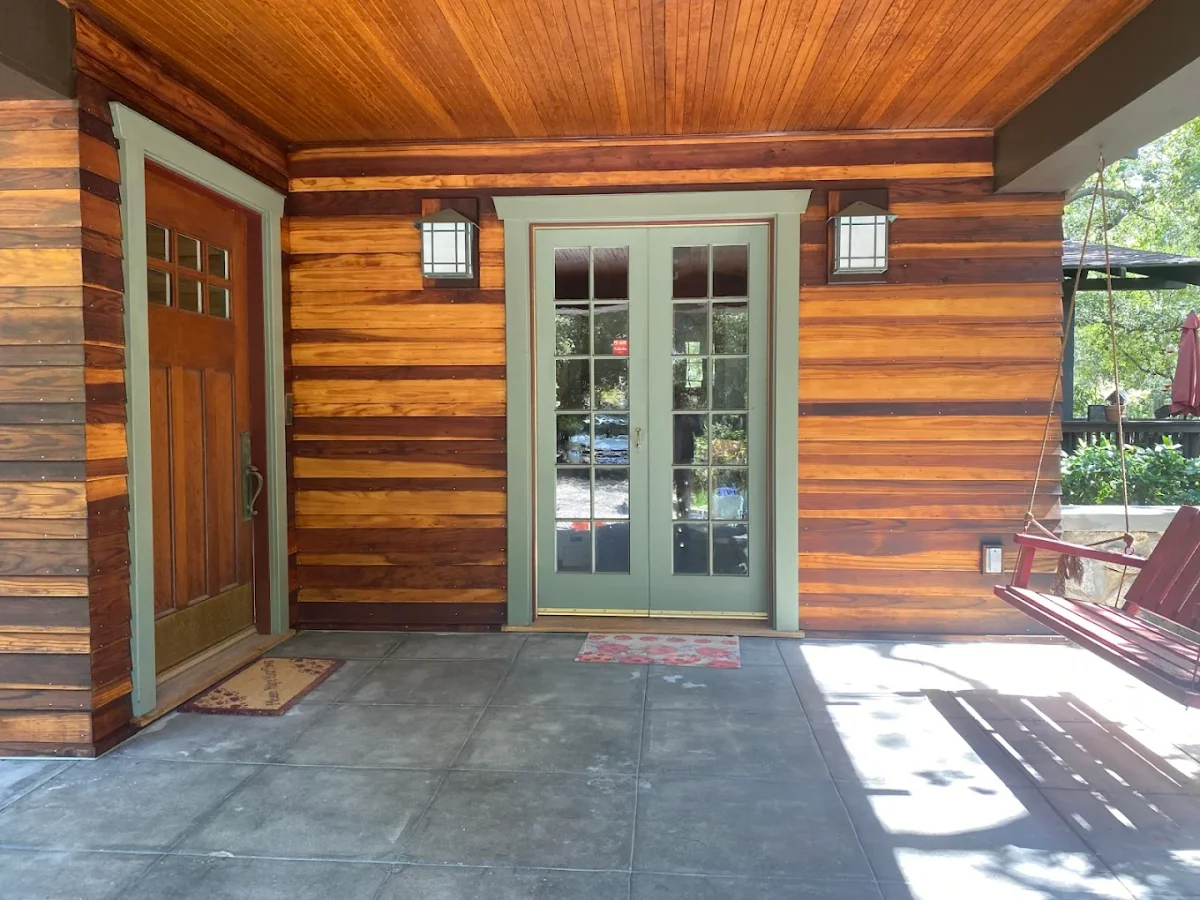
A residential facade with painted trim around the windows, where stucco meets wood detail and the prep approach has to change in the same wall plane.
Wood siding prep, step by step
Remove what is already failing
Washing comes first here too, but the real work is scraping. Every blistered, lifting or checked area comes off until the edge is sound and bonded. Then those edges get sanded so the transition between old paint and bare wood is feathered flat. If you can feel the ridge with your hand, you will see it in the finish coat.
Deal with the wood itself
Soft fascia, split siding butts, rotted trim ends and failed window sills have to be repaired or replaced before painting. On most homes the damage clusters in predictable places: the south and west elevations, under gutter joints, at ground level where sprinklers hit, and anywhere flashing is tired. Fixing wood rot is not an upsell, it is the only way the coating lasts.
Caulk, then prime every bare inch
Siding laps, trim joints, corner boards and penetrations get caulked so moisture stops getting behind the film. Then all bare wood gets primed. Primer seals the grain, blocks tannin bleed on species that stain through, and gives the topcoat a uniform surface to sit on. Spot priming is fine on a sound wall. A wall that was scraped heavily usually wants more coverage than that.
Side by side comparison
| Stucco | Wood siding | |
|---|---|---|
| Typical failure | Hairline and spider cracking, chalking, moisture intrusion at openings | Peeling, blistering, checking, dry rot at end grain |
| Core prep | Power wash, crack repair, patch, texture match, prime bare areas | Power wash, scrape, sand to a sound edge, repair rot, caulk, prime |
| Coating priority | Flexibility and waterproofing | Adhesion and grain sealing |
| Common coating choice | Elastomeric or premium exterior finish | Premium exterior finish over primer |
| Where time goes | Patching and blending | Removal and wood repair |
| What goes wrong if rushed | Patches telegraph through, cracks reopen | New paint peels with the old layer underneath |
Many homes in this area are both. A stucco body with wood fascia, wood garage doors and wood window trim is extremely common, and that house needs both prep programs running at the same time. Color choices get easier once prep is settled, and if you are weighing palettes for a stucco body with wood trim accents, the guide to the best exterior paint colors for Sierra Madre homes in 2026 is a useful starting point.
How a walkthrough should go
Before any proposal makes sense, somebody needs to touch the house. A real assessment includes probing suspect wood with a tool rather than looking at it from the driveway, mapping crack patterns on the stucco, checking for chalking by hand, and looking at the elevations that take the most sun. That walkthrough is what separates a plan from a guess, and it is what determines whether a project lands at the short or long end of the five to ten day range on a single family home.
Interiors follow the same logic on a smaller scale. If the repaint is part of a larger refresh, our Interior Painting work uses the same preparation first approach with low-VOC and zero-VOC options and full masking of floors, furniture and fixtures.
Working with Huff Painting Co.
Huff Painting Co. is a family-owned residential and commercial painting business with over 40 years of experience, founded by Doug Huff in the 1980s and now run day to day by his son Cory Huff. We are not a franchise. The same family crew does the work, with thorough preparation and premium materials on every job. We serve Sierra Madre, Pasadena, Altadena, Arcadia, San Marino, La Canada Flintridge and Alhambra, and we carry California license number 451832 along with insurance and bonding.
Our Exterior Painting service covers siding, trim, doors, shutters and fascia, starting with power washing and surface preparation, wood rot and stucco repair, priming of bare surfaces, and premium UV-resistant exterior coatings. For whole house projects, our Single Family Homes page explains how we tailor the approach to Craftsman, Spanish Colonial, mid century ranch and modern builds.
"If your looking for a honest guy to do your painting, Huff Painting is the one you want to use. You couldn't find a better company to work on your house. Would highly recommend." Kevin de Rose, Pasadena
To talk through your stucco, your siding or both, see our Pasadena painting service area or call (747) 888-8314.
FAQs
Do you paint stucco?
Yes. Stucco is one of the most common exterior surfaces we work with across the San Gabriel Valley. We use elastomeric coatings that flex with temperature changes and provide superior waterproofing, applied after cracks are repaired and bare areas are primed.
How long does exterior paint last?
With proper preparation and premium paint, exterior finishes typically last 7 to 10 years in the San Gabriel Valley climate. Sun exposure, sprinkler overspray and the condition of the substrate all influence where a specific house lands in that range.
What kind of preparation do you do before painting?
We start with power washing, then scrape and sand any peeling or flaking areas. We also caulk gaps, patch holes, repair damaged wood or stucco, and prime bare surfaces before applying finish coats.
How long does it take to paint a single family home?
Most single family home projects take between five and ten working days depending on the size of the house and the amount of prep work involved. Larger homes or those with significant wood repair or stucco patching may take longer.
Can a house with both stucco and wood be painted at once?
Yes, and most homes here are exactly that. The two surfaces get different preparation and sometimes different coatings, then the color scheme ties them together. We sequence the repair work so the whole exterior is ready before finish coats begin.
More guides
- Best Exterior Paint Colors for Sierra Madre Homes in 2026
- Cabinet Painting in Sierra Madre: Transform Your Kitchen for Less
- Commercial Painting for San Gabriel Valley Storefronts
- Deck Staining vs Deck Painting: Which Is Better for California Decks?
- 2026 Exterior Paint Color Trends for California Homes
Related painting services
If this article covers something you are planning, these pages go into what the work actually involves on a job.
- Interior painting for walls, ceilings, trim, and cabinets, including how we mask and protect a house you are still living in.
- Single family home painting for a whole house inside or out, from the first walkthrough to the final punch list.
- Apartment building painting for owners and property managers with occupied units and common areas that have to keep working.
- Painting in Pasadena and the rest of the San Gabriel Valley, with the local prep, permit, and historic district notes that apply there.