
How Foothill Sun Exposure Affects Exterior Paint in Sierra Madre
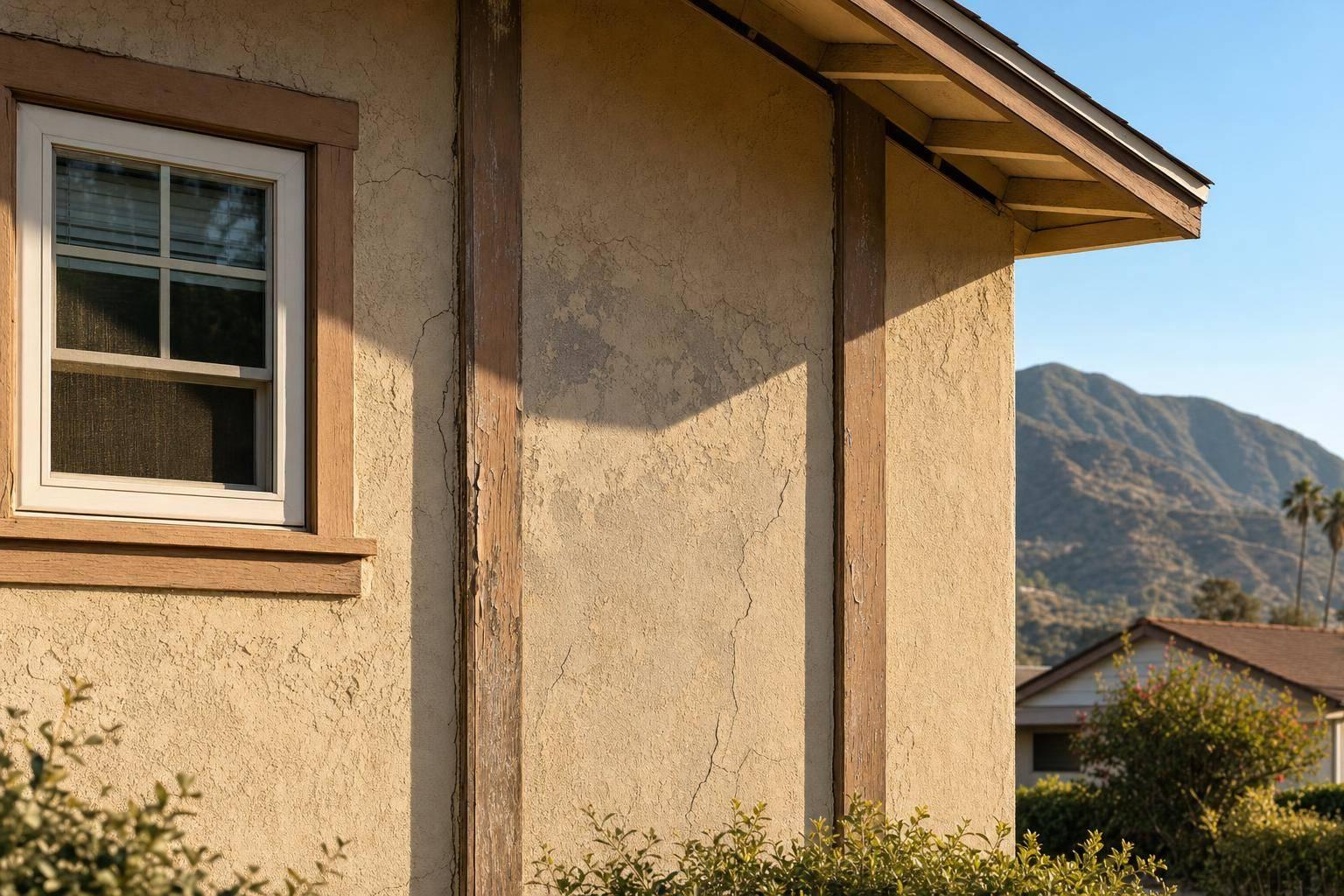
In Sierra Madre, the sides of a home that get the most sun usually wear out first. If I want to spot paint trouble early, I look for fading, chalking, cracks, peeling, and open caulk on south- and west-facing walls, plus trim, sills, and ledges.
Here’s the short version: sun damage often starts with color loss and a powdery surface, then moves into brittle paint, cracking, and paint coming loose. Afternoon heat is often the hardest on exterior surfaces, and dark colors can make uneven fading stand out more. A simple once-a-year check can help catch small issues before they turn into a bigger repaint.
What I’d focus on first:
- Check the hottest sides first: south- and west-facing walls
- Look beyond walls: trim, fascia, sills, rails, and ledges often fail sooner
- Watch for early signs: faded color, chalk on your hand, flaking, peeling, and split caulk
- Prep matters: clean, scrape, sand, repair, prime, and seal gaps before repainting
- Use the right coating: stucco often does better with coatings that can handle movement
- Paint at the right time: avoid putting paint on hot surfaces in direct sun
- Keep up with maintenance: a yearly inspection and light cleaning can help paint last longer
A few useful facts stand out here: west-facing walls often take the worst afternoon sun, horizontal surfaces usually wear faster than vertical ones, and even small bare spots can speed up paint failure. So if I’m trying to make exterior paint last in Sierra Madre, I’d start with sun-heavy areas, fix weak spots fast, and repaint only after the surface is properly prepped.
How sun exposure damages exterior paint
Sun exposure wears down exterior paint in two steps: first the color fades, then the paint film starts to fail.
Fading, chalking, and uneven color loss
UV rays slowly break down the paint film. Over time, that means less color staying power and a finish that looks dull, flat, or washed out. Another common sign is chalking - a dry, powdery residue that comes off on your hand. If that’s happening, the coating is starting to give out.
This kind of wear usually doesn’t show up evenly across the house. South- and west-facing walls tend to fade and chalk first because they take the most sun. Darker paint colors can make the contrast stand out more, especially when one side of the home ages faster than the others.
As the coating gets weaker, it’s also more likely to crack and peel.
Cracking, brittleness, peeling, and blistering
Once paint loses flexibility, heat and day-to-day temperature swings can start opening up cracks. Stucco is especially prone to this because it expands and contracts as it heats up and cools down.
Peeling and blistering often show up when heat weakens the bond between the paint and the surface, or when moisture gets trapped under paint that has turned brittle.
sbb-itb-b9ba8eb
Where to inspect Sierra Madre homes first
Once you know what sun damage looks like, begin with the areas that take the most direct sun.
South-facing and west-facing walls
Inspect south-facing and west-facing walls first. West-facing walls tend to take the biggest hit because they sit in harsh afternoon sun, right when surface temperatures are at their highest. That mix of heat and UV exposure speeds up fading, chalking, and paint breakdown.
Trim, sills, ledges, and other exposed details
Don’t stop at the main wall surfaces. Trim, fascia, window sills, ledges, handrails, and other exposed details often show wear sooner.
Horizontal surfaces matter even more here. They get more direct UV exposure and tend to collect debris more easily than vertical walls. Check each side of the house on its own, because damage often shows up unevenly.
A short inspection checklist for homeowners
Walk each side of the house and look for these signs:
- Fading: Color that looks washed out or uneven
- Chalking: A powdery residue on the surface
- Cracking or flaking: Breaks in the paint layer
- Peeling: Paint lifting away from the surface
- Cracked or open caulk: Gaps around windows and doors
- Bare spots: Areas where the wood or stucco underneath is exposed
These early signs can tell you whether the problem is limited to one area or starting to spread.
If you spot any of them, the next step is surface prep before repainting.
What to do before and during repainting
Sun Damage to Exterior Paint: Signs, Inspection & Fix Steps
Once you know what kind of damage you're dealing with, the next move is prep work and repainting with sun exposure in mind.
Prepare the surface so new paint can bond
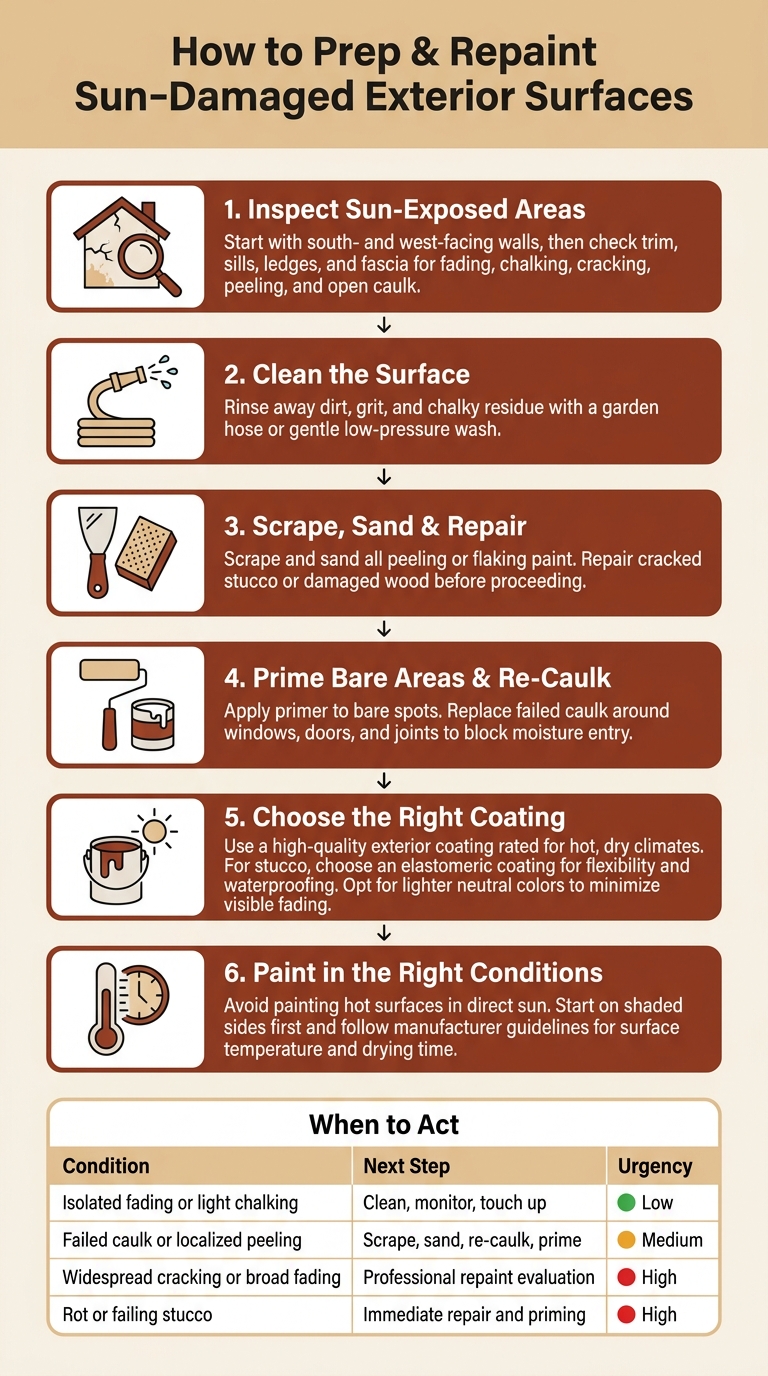
Good prep is what makes paint stick and stay put. Start by washing away dirt and chalky residue. Then scrape and sand any peeling or flaking paint.
If you spot cracked stucco or damaged wood, fix that before anything else. Prime bare areas, and replace any failed caulk around joints so water can't sneak in.
After the surface is solid, it's time to pick the coating.
Choose coatings and colors with sun exposure in mind
Go with a high-quality exterior coating made for hot, dry weather. For stucco, elastomeric coatings are a strong pick because they can flex as the surface expands and contracts with temperature swings. They also help with waterproofing.
Use a compatible primer over repaired areas. And if fading is a concern, lighter neutral colors usually hide it better.
Even good paint can fail if you apply it at the wrong time.
Paint in the right conditions
If paint goes onto a very hot surface in direct sun, it can dry too fast. That often leads to weak adhesion and early paint failure.
A smarter move is to paint the shaded sides first and follow the manufacturer's directions for surface temperature and drying time.
Maintenance steps that help paint last longer
Clean and inspect sun-exposed areas on a regular schedule
Once you know which parts of your home fade first, put them on a simple maintenance schedule. A quick rinse with a garden hose helps wash away dirt and grit before they grind down the finish. If buildup is heavier, use a gentle low-pressure wash.
At least once a year, check your home’s exterior for failed caulk, peeling, cracking, or flaking paint. Pay close attention to sun-exposed walls, trim, sills, ledges, and caulked joints. These spots usually show wear first, so they’re worth a closer look.
When small repairs are enough and when to plan a larger repaint
A little fading or light chalking doesn’t always mean you need to repaint the whole house. In many cases, cleaning the surface and keeping an eye on it is enough. But failed caulk, peeling in several areas, or broad cracking is a different story. That usually points to a bigger repaint job.
Use what you find to decide whether the next step is cleaning, repair, or repainting.
| Visible Condition | Appropriate Next Step | Urgency |
|---|---|---|
| Isolated fading or light chalking | Clean, monitor, and touch up | Low |
| Failed caulk or localized peeling | Scrape, sand, re-caulk, and prime affected areas | Medium |
| Widespread cracking or broad uneven fading | Professional repaint evaluation | High |
| Rot or failing stucco | Immediate repair and priming to prevent structural damage | High |
Early cleanup and small repairs can slow paint failure before it spreads. If you’re not sure whether you’re looking at normal wear or the start of a bigger issue, Huff Painting can assess the exterior and recommend the next step.
FAQs
How often should I inspect sun-exposed paint?
In Sierra Madre, year-round sun and dry heat can be hard on exterior paint. That’s why regular inspections matter. Pay close attention to areas that get the most sun, since they’re often the first to show peeling, cracking, or other wear.
Catching small issues early can help protect your home and avoid bigger repair work later. If you spot trouble areas, Huff Painting can help with surface prep and coatings that fit local conditions.
Does stucco need a different exterior coating?
Yes. Stucco needs special attention because it behaves differently from other exterior surfaces.
In Sierra Madre, elastomeric coatings are often a smart choice. They can flex as temperatures shift, which helps limit cracking and adds a strong layer of waterproofing. Huff Painting uses coatings suited to the local climate to help protect stucco from the sun and heat in the area.
When is fading a sign I need to repaint?
Fading under Sierra Madre’s harsh sun is normal over time. But once the paint stops protecting your home’s exterior, it’s time to take a closer look.
If the paint looks heavily faded, dull, or chalky, the paint film may be wearing thin or starting to fail. Huff Painting can inspect the surface and let you know if it’s time for a fresh coat.